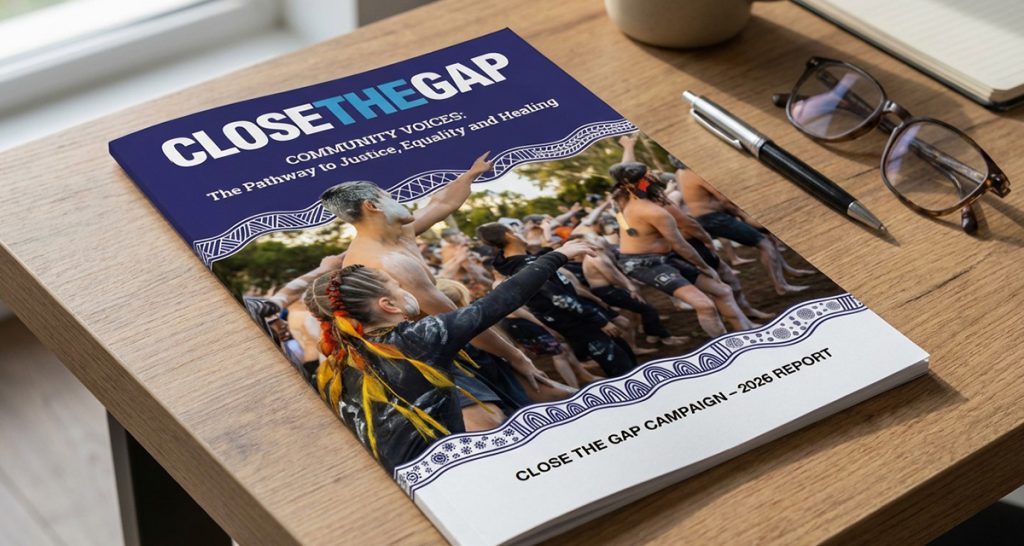
The release of the 2026 Close the Gap report is an important moment for Australia. It reinforces something many of us working in the community-managed sector see every day: the gap is not closing at the pace it should, not because we lack evidence or commitment, but because the systems themselves have not shifted.
“We cannot keep asking communities to deliver better outcomes within systems that were never designed with them. If we are serious about closing the gap, we need to redesign those systems, not just refine them,” said Kerry Hawkins, CEO of Community Mental Health Australia (CMHA).
The report is clear that self-determination is not an aspiration or an add-on. It is a necessary condition for progress. Where Aboriginal and Torres Strait Islander communities are empowered to lead; in decision-making, in service design, and in implementation; outcomes improve. This is not theoretical. It is evidenced across the country in community-led initiatives that are culturally grounded, responsive and effective.
The challenge is not proving what works. It is embedding it.
“We know what works,” Kerry says.
“When Aboriginal and Torres Strait Islander communities lead, outcomes improve. The question is whether we are prepared to back that in a consistent, long-term way, through policy, funding and legislation,” Kerry added.
“We see incredible work happening in communities every day,” Kerry says.
“But too often it’s delivered despite the system, not because of it. That’s what has to change,” she added.
“This report is not calling for new ideas, it is calling for the implementation of what is already known, and for the courage to follow through,” said Kerry.
Closing the Gap remains a national responsibility. Achieving it will require more than commitment. It will require structural change that is deliberate, with rights protected in law to ensure justice, equality, healing, and self-determination for all.
To read the report, visit Close the Gap.