
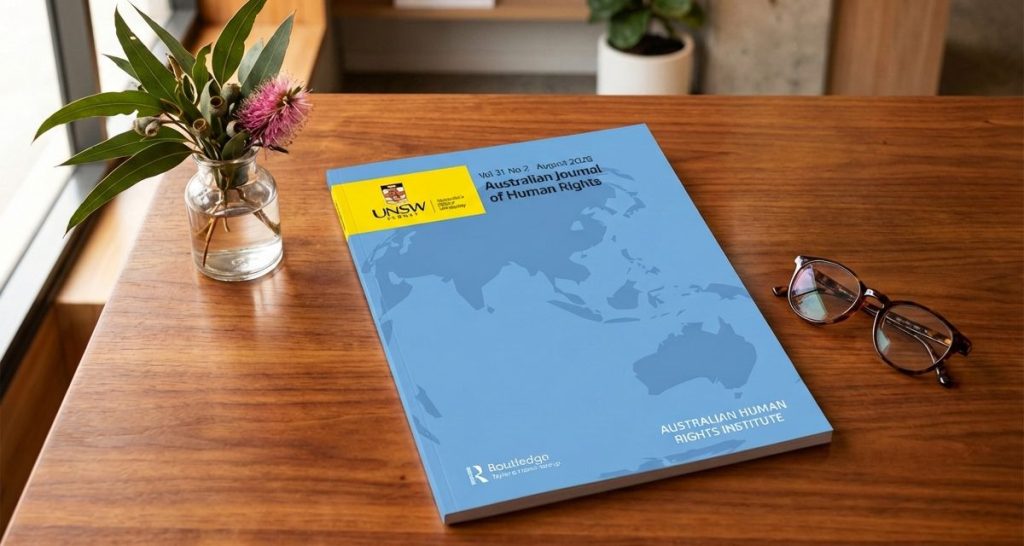
A recent article published in Australian Journal of Human Rights (2026) presents a carefully reasoned case for a Human Rights Act in Western Australia, using the state’s mental health system as a practical example of why stronger legislative protections matter.
Titled Advancing a rights-based mental health system: the case for a Human Rights Act for Western Australia, the paper argues that without stand-alone human rights legislation, Western Australia lacks a consistent framework requiring laws, policies and public authorities to properly consider and comply with human rights. In mental health, that gap has real implications, particularly in areas such as involuntary treatment, restrictive practices and culturally safe care.
At Community Mental Health Australia, we know that legislation shapes lived experience. The way laws are framed influences how services are designed, how professionals practise and how people experiencing mental ill health are treated. A clear, enforceable human rights framework provides a strong foundation for accountability, transparency and dignity in care.
Community Mental Health Australia acknowledges that our CEO, Kerry Hawkins, is one of the contributing authors of this work. Kerry’s involvement in the article occurred prior to her appointment as CEO of CMHA, reflecting her longstanding commitment to advancing a rights-centred approach to reform.
CMHA President Cathy O’Toole welcomed the publication and acknowledged the leadership demonstrated by Kerry and her co-authors.
“This is an important contribution to the national conversation about mental health reform. Kerry Hawkins and her co-authors have brought together a thoughtful and practical case for embedding human rights into the way systems are governed and delivered in Western Australia,” said Cathy.
“Unfortunately, in this country, we have a mix of states and territories with Human Rights Acts and others without. At a national level, we do not have one. That means the legal protections available to people can vary significantly depending on where they live,” added Cathy.
We see this inconsistency play out across Australia. While some jurisdictions operate under Human Rights Acts that require decision-makers to actively consider human rights, others do not. For people seeking mental health support, this can mean very different experiences depending on postcode.
A rights-based approach is not an abstract concept. It is about ensuring that people are treated with dignity, that their voices are heard and that systems are designed around recovery, inclusion and self-determination. It is about recognising that people experiencing mental ill health are rights-holders, not passive recipients of services.
As reform continues across Australia, this article reinforces a central principle: when systems are grounded in human rights, they are stronger, fairer and more accountable for the people they exist to serve.
At CMHA, we will continue to advocate for reforms that embed human rights at the heart of mental health policy and practice. Sustainable reform requires more than programmatic change. It requires a clear legislative framework that sets expectations, guides decision-making and protects the rights of people and communities across the country.
Strengthening human rights protections is not just a legal exercise. It is a practical step towards building a mental health system that is consistent, compassionate and centred on the people it exists to support.
You can read the journal article online here: https://www.tandfonline.com/doi/permissions/10.1080/1323238X.2025.2605948?scroll=top