
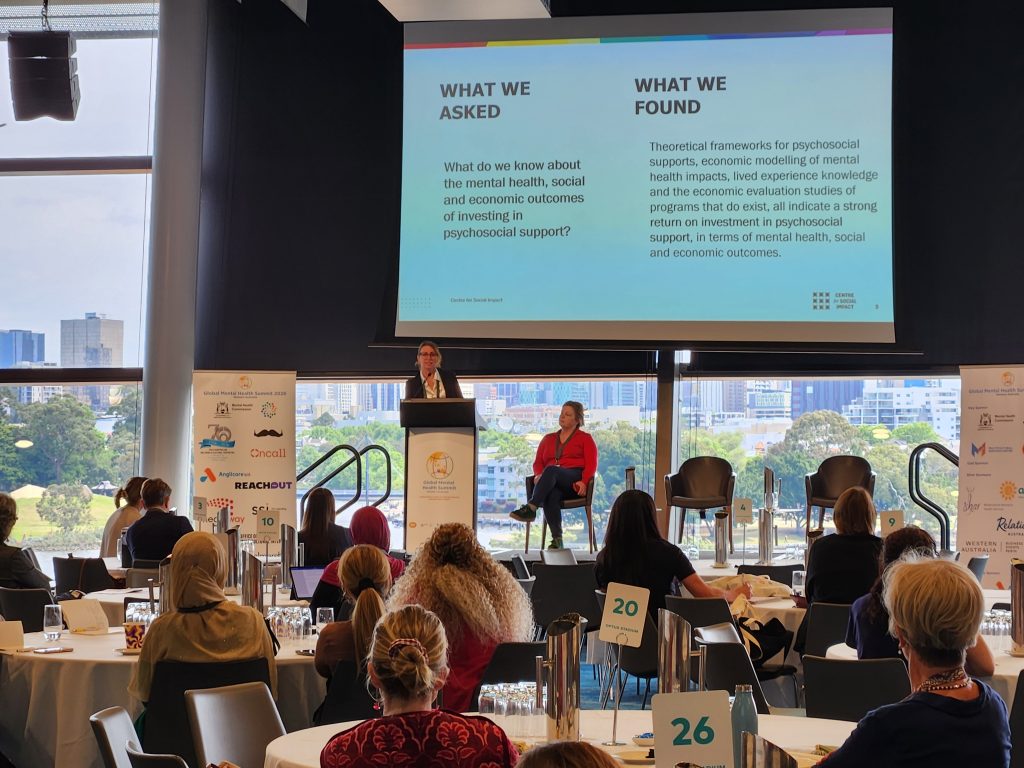
People with lived experience, researchers, advocates and leaders from around the world connected at the 2026 Global Mental Health Summit in Boorloo Perth from 14-16 October 2026.
Community Mental Health Australia (CMHA) contributed to the conversation in partnership with Centre for Social Impact (CSI) with CMHA CEO Kerry Hawkins and CSI Senior Research Fellow Lisette Kaleveld presenting their research into the economic value of psychosocial support.
We know the value of psychosocial support cannot be measured by numbers alone. People with lived experience, their supporters and community organisations have long understood the difference these community-based, non-clinical supports make.
When used with care, economic analysis strengthens our collective voice to help guide investment, policy and system design, helping ensure these supports are recognised in the decisions that shape our mental health system.
Centred on the theme Building Resilience, Equity, and Culturally Responsive Integrated Support Systems, the Summit stood out for the diversity of voices it spotlighted.
Presenters repeatedly challenged systems overlooking the social and structural drivers of distress, arguing that many existing models of care are poorly equipped to respond to the complexity of people’s lives.
For many of us, Race Discrimination Commissioner Giridharan Sivaraman’s keynote on the impact of racism on wellbeing in Australia was a conference highlight. Reflecting on identity and belonging, the Commissioner spoke candidly on the systemic barriers and attitudes that continue to undermine people’s wellbeing and participation in the community.
From tens of thousands of years of Aboriginal kinship to community knowledge developed in cultures across the world, we have a wealth of wisdom shaped by lived experience, human rights and self-determination. The challenge isn’t knowing what to do to help people to thrive, but whether we can build systems prepared to listen.