For decades, Open Dialogue has been one of the most talked-about ideas in mental health reform: a person-centred, family-and-community-oriented approach to crisis care, that puts relationships and continuity at the centre, rather than diagnosis and hand-offs between teams.
Until now, the evidence behind it has come largely from long-term, non-randomised studies. That changed this year, with the publication of results from ODDESSI, the largest randomised controlled trial of Open Dialogue ever conducted.
“This is the moment the community-managed mental health sector has been waiting for. For years, this approach has been championed by people who’d seen its impact firsthand, but hadn’t had the rigorous, large-scale trial evidence to back it up. Now we have it, and it’s telling us something the sector can’t ignore,” said Kerry Hawkins, CEO of Community Mental Health Australia (CMHA).
The ODDESSI trial followed 494 adults presenting in crisis to community mental health services across five NHS trusts in England, comparing Open Dialogue against ‘treatment as usual’ over two years. Across almost every outcome that matters to people using services, Open Dialogue came out ahead:
- Far fewer hospital admissions. People receiving Open Dialogue had more than three times higher odds of avoiding psychiatric inpatient admission altogether.
- Fewer re-referrals to crisis care. Significantly less likely to be re-referred to crisis or secondary mental health services over two years.
- Better self-rated health and recovery at 24 months.
- Higher satisfaction with care.
- No safety concerns. Serious adverse events were, if anything, less frequent in the Open Dialogue group.
On its primary measure, time to relapse after recovery, the trial found no significant difference between the two approaches. However, the strength and consistency of the results above are exactly why the community-managed mental health sector is paying attention.
“Reducing hospital admissions and re-referrals isn’t just a statistic, it’s fewer disrupted lives, fewer people cycling back through an already stretched crisis system, and more people feeling genuinely heard and understood,” said Kerry.
“This trial shows that isn’t a nice-to-have, it’s connected to real, measurable outcomes,” she added.
“Importantly, given the three-fold reduction in hospital admissions, it is exciting to know there will be a health-economic analysis undertaken to establish the economic value of Open Dialogue. Community Mental Health Australia has recently commissioned a ground-breaking Economic Value of Psychosocial Support report by the Centre for Social Impact | University of Western Australia establishing an evidence base for investing in social and relational mental health services and we look forward to seeing this built on with the Open Dialogue economic analysis,” said Kerry.
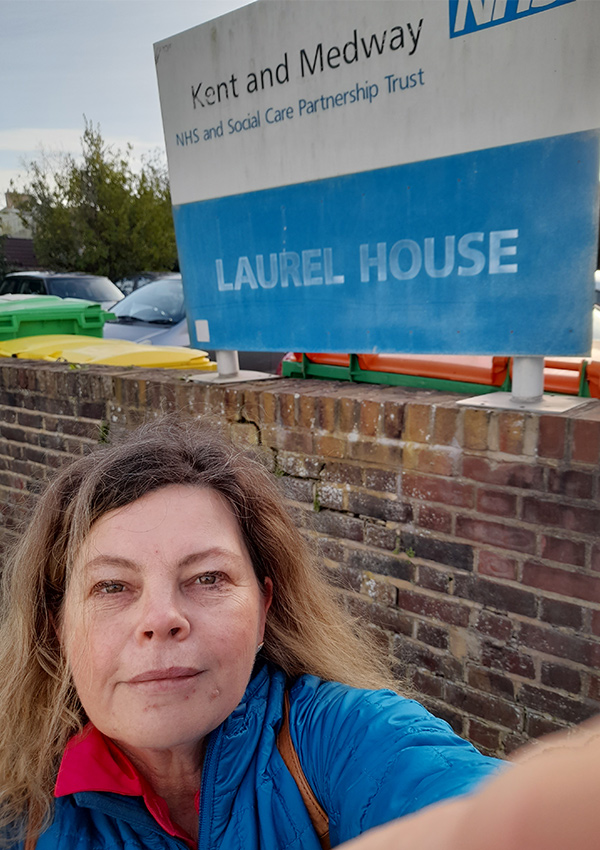
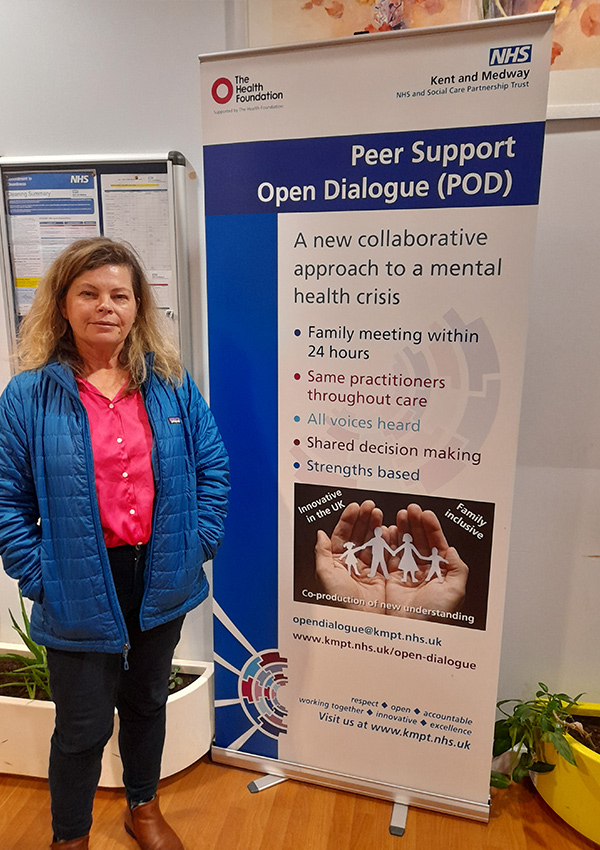
CMHA’s understanding of Open Dialogue has been shaped in part by Kerry Hawkins’ visit to England in 2024, during the ODDESSI trial period.
“Seeing Open Dialogue delivered in real NHS crisis teams, not as a pilot running in isolation, but woven into the day-to-day work of stretched services was a turning point for me. What I saw was clinicians working with the person experiencing distress, alongside their families, carers, kin and networks, under exactly the same pressures our system is under, delivering care differently, and getting different results,” commented Kerry.
“That told me this isn’t a fragile model that only works under ideal conditions or in Scandinavia, it’s something rigorous that can transform how we approach crisis care in this country,” she added.
The Open Dialogue Centre in Australia, funded by Grant Family Philanthropy, and led by Keith Bryant, is doing incredible work rolling this concept out in Australia.
“The Open Dialogue Centre has done the patient work of building the case for this approach in Australia long before we had this evidence to point to. The sector owes them real credit for keeping this on the table,” commented Kerry.
“In particular, Lived Experience luminaries such as Flick Grey and many others have played such an important role in establishing a foothold in Australia in previous decades. It is important that any new initiatives rolled out in Australia have Lived Expertise ingrained in the governance, development and delivery of Open Dialogue from inception, given its strong fidelity to non-clinical ways of working,” remarked Kerry.
“The ODDESSI results now give us a strong evidence base for government to seriously consider how crisis care is approached in this country. Additionally, the dialogical approach of Open Dialogue complements the Social and Emotional Wellbeing approach that First Nations peoples have been practicing for millennia,” she added.
“What we need now are evidence-based decisions made by government to re-direct some of the funding that goes to Australia’s stretched ‘treatment as usual’ approach, to person-centred, family and social network responsive approaches like Open Dialogue. The community-managed mental health sector is ready, willing, and with the right investment and support, able to bring this to life for Australians right across the country,” said Kerry.
It’s no secret the mental health system in Australia is over-stretched. This report gives the evidence required to take this person-centred, dialogical approach seriously and deliver crisis care that Australians deserve.
Read the ODDESSI Trial Article here.